



Volunteer in Italy


Volunteer and work in Italy - join our community
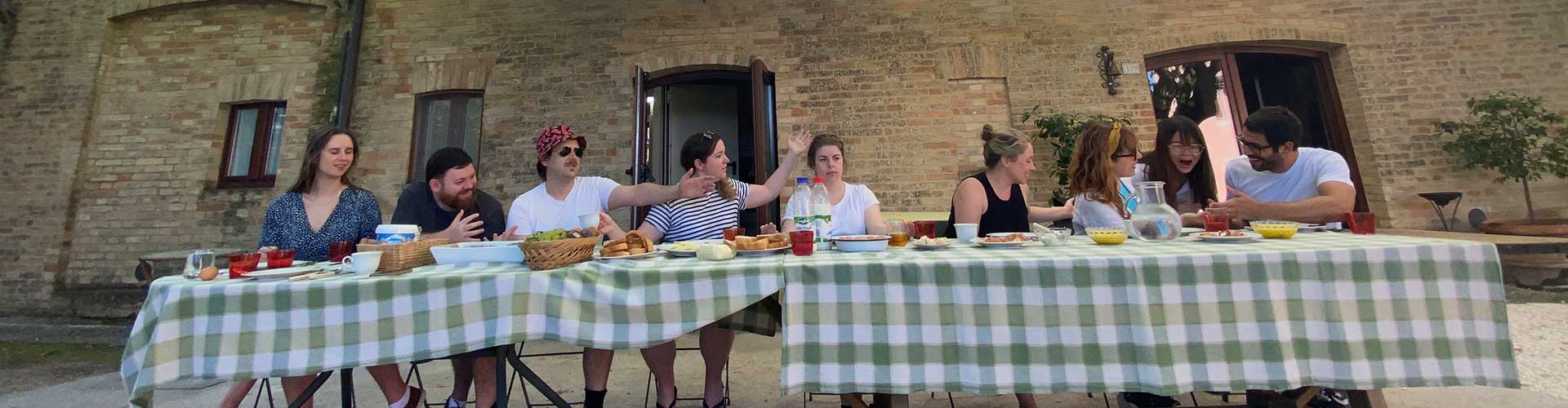
Voluntary work in Italy through Workaway combines the Mediterranean sun, the incredible cuisine, and warm Italian hospitality with an opportunity to experience the country more slowly and more locally. For a few hours of help each day, accommodation and usually meals are provided as part of the cultural exchange. So whether you’re staying with a family, helping on a farm, joining a community project or supporting a sustainable initiative, it isn't just an opportunity to taste La Dolce Vita – it’s your chance to build real connections.
As a global community for volunteering and cultural exchange, Workaway helps you connect with local hosts across Italy and experience the country on a deeper level. You can join as a solo traveller, as a couple, or even as a family. Whether you are a backpacker, recently retired, or setting off on a grown-up gap year—we've put together what we've learned to help you find your perfect host. Having an idea of what to expect season-wise, how much things might cost, and what the entry requirements are, you can pick the volunteering opportunity just right for you.
Workaway in Italy: volunteer programs and host families



How to find volunteer and working holiday opportunities in Italy

Create a great profile, we will verify you within 24 hours

Contact your favourite hosts, discuss your stay and what is expected in return

Discover new cultures, friends, places and skills
Why volunteer in Italy

World-famous cuisine
Volunteering is one of the best ways to help travel through your taste buds, and there’s no arguing Italy offers some of the best food in the entire world. The country’s food culture changes dramatically from one region to another, from risotto and polenta in the north to Tuscan soups, handmade pasta and the seafood-heavy cooking of the south. You’re guaranteed to leave with a full heart and a full stomach.
Staying with a local host gives you the chance to experience that beyond restaurants too, whether that means sharing family meals, learning a recipe, helping in a vegetable garden or seeing how local ingredients are grown and used.
Italy is a dream destination for foodies, no doubt. And volunteering there is one of the best ways to dive into all those amazing flavours and aromas. If you're hoping to sample as many local specialities as possible, work exchange allows you to stay longer in one place and move to another region whenever you are ready.

Thousands of years of history
Italy is a treasure trove of history that spans thousands of years, from the grandeur of the Roman Empire to the Renaissance masterpieces that shaped Western art and culture. Walking Rome's cobblestone streets, exploring the ruins of Pompeii, or passing by St. Mark's Basilica in Venice – these historical spots are woven into everyday life.
There are thousands of museums in Italy focused on history, anthropology, and archaeology. Visiting them is a solid way to learn about the Roman Empire, Italian kingdoms, and how the country united under Garibaldi.
But Italy’s history isn’t confined to museums. If you’re staying for a few weeks as a volunteer, you have time to notice how much of it is still part of everyday life, from village festivities and local traditions to old farmhouses, churches and historic centres that locals still use and live around.
Historic festivals, such as Palio di Siena, Calcio Storico Fiorentino, Festa dei Ceri, Regata Storica, and the famous Venice Carnival, are another way to see that history and tradition are still being kept alive.

The uniqueness of each region
Thinking about hiking in Switzerland-like scenery, with cowbells chiming? Head to northern Italy. Regions like Trentino, Lombardy, or Piedmont have crystal-clear, yet warm, mountain lakes. In Tuscany, you can tour vineyards and mediaeval villages, surrounded by cypresses and olive groves. And in Venice, although pricey, a gondola ride through those historic canals is a pretty unique experience.
The diversity of Italian regions and landscapes means you'll find pretty much any kind of volunteering project there. Whether you see yourself getting your hands dirty at the organic farm in the Puglian countryside, restoring an ancient mansion in Umbria, practising English with children at the camp in the Alps, or exploring museums and galleries of Milan while pet-sitting in the city.
Staying with local hosts means you can spend more time in all those amazing places, but more importantly, you get to experience their daily life, unique traditions, food, and even local dialects firsthand.

Explore off the beaten track
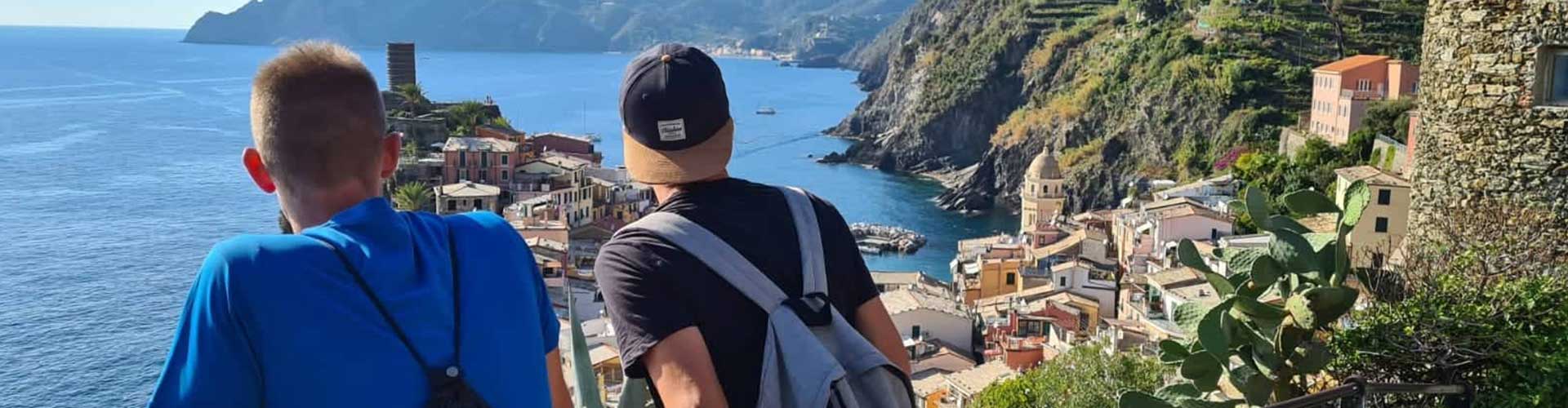
There are parts of Italy seriously struggling with mass tourism, such as charming little villages known as Cinque Terre. Overtourism in Venice threatens its world heritage status, and many of Italy’s major tourist hotspots face similar pressure.
Volunteering in Italy is a great way to spend more time in lesser-visited places, whether you’re travelling Europe on a budget or simply want to escape the crowds. Picture a farm or family stay in the countryside in Emilia-Romagna, dotted with charming mediaeval towns. They're especially lovely to see when the cherry blossoms come out in spring.
In Abruzzo, over 100 hosts are waiting for volunteers, and so are 80 miles of coastline along the Adriatic Sea without the tourist crowds. In your free time, you could go hiking through beech forests of the Apennine Mountains and enjoy an authentic, slower-paced side of the country.
And there is Calabria with its pristine beaches, charming fishing villages, and hundreds of volunteering opportunities.

The sea is always close
While Italy’s boot-shaped mainland has no shortage of incredible beaches, there are also 400 islands within the country’s borders ready to be explored.
While Capri and Panarea are renowned as holiday destinations for the rich and famous, others offer more rustic charm well worth visiting. From Sicily and Sardinia, the largest in the Mediterranean, to the tiny, pastel-painted paradise of Procida, which is only two square miles.
Italy’s long coastline opens up a very different kind of Workaway experience. Depending on where you stay, you might find yourself near small fishing villages, island communities, sailing projects, marine conservation initiatives or simply a family home within reach of the beach.
If you love being by the water, whether that means swimming, diving, kayaking, paddleboarding, surfing, or just spending your free time on the beach, you’ll find plenty of ways to make the most of Italy’s beautiful coastline.
What recent volunteers say about their Workaway in Italy
There are 13670 reviews for 500+ Hosts and organizations in Italy.
500+ Hosts in Italy were rated at least 4.9/5!
Best time for work exchange in Italy
| Climate table for Italy | Jan | Feb | Mar | Apr | Mai | Jun | Jul | Aug | Sep | Oct | Nov | Dec |
|---|---|---|---|---|---|---|---|---|---|---|---|---|
| Max. temperature in °C/°F | 11/52 | 12/54 | 16/61 | 19/66 | 23/73 | 27/81 | 30/86 | 30/86 | 26/79 | 21/70 | 16/61 | 12/54 |
| Min. temperature in °C/°F | 4/39 | 4/39 | 6/43 | 9/48 | 14/57 | 18/64 | 20/68 | 20/68 | 17/63 | 13/55 | 9/48 | 5/41 |
| Sunny days per month | 4 | 5 | 6 | 7 | 8 | 9 | 10 | 9 | 7 | 6 | 4 | 3 |
| Rainy days per month | 8 | 7 | 7 | 7 | 6 | 5 | 4 | 4 | 5 | 7 | 8 | 8 |
| Water temperature in °C/°F | 14/57 | 13/55 | 14/57 | 15/59 | 19/66 | 22/72 | 26/79 | 26/79 | 24/75 | 22/72 | 19/66 | 16/61 |
The table shows average values based on climate data for Milan, Rome, Bari, Venice and Palermo
Spring (March-May): Spring is a great time to volunteer in Italy. The weather is nice and mild across the country. In the north, regions like Piedmont and Lombardy usually get between 10-20°C (50-68°F). Central parts like Tuscany and Lazio are a bit warmer, with highs around 13-24°C (55-75°F). Southern Italy, including Sicily and Sardinia, stays mild and sunny, often reaching 16-24°C (60-75°F). It's a good season for outdoor projects, like farming, gardening, local community events, or helping prepare for summer activities and kids' camps.
Summer (June-Aug.): Italy gets really hot in the summer, particularly away from the coast and in the south. Regions like Calabria, Puglia, and Sicily can see temperatures over 35°C (95°F). Up north, in places like Piedmont, Lombardy, and Veneto, temperatures can be more manageable, usually between 26-30°C (79-86°F). If you’re planning a Workaway during this period, it’s worth thinking carefully about the type of stay and how much time you’ll be spending outdoors. July and August are also the busiest time for tourism, so you may see more seasonal opportunities around hostels, cultural events and other visitor-focused projects in places like Rome or Florence.
Fall (Sep.-Nov.): Fall is one of the best seasons to volunteer in Italy, once the summer heat subsides. The north has mild weather, usually between 16-20°C (60-68°F). Central Italy, like Tuscany, Umbria and Lazio, has comfortable highs of about 15-24°C (55-75°F). Southern Italy stays nicely warm, often around 18-25°C (65-77°F). Since it's harvest season, it can be an ideal time to look for projects that involve eco-farming and gardening, as well as supporting restoration and other outdoor projects.
Winter (Dec.-Feb.): Southern Italy and the islands, like Sardinia and Sicily, enjoy mild winters with temperatures around 10-15°C (50-60°F). Northern Italy and mountainous areas, on the other hand, can be quite cold, with temperatures dropping below 5°C (41°F), making indoor exchanges, like family stays, language exchange, community-based activities or creative projects, a better fit. Apart from the Alpine ski resorts, winter is a quieter time for tourism, offering volunteers a deeper immersion in local life and greater opportunities to practise Italian.
Workaway impressions from Italy


Where to volunteer in Italy
-
Abruzzo
(41 )
Pescara, L'Aquila
- Aosta Valley (10 )
-
Apulia
(156 )
Bari, Taranto, Foggia, Lecce, Barletta, Brindisi
-
Basilicata
(18 )
Potenza
-
Calabria
(42 )
Reggio di Calabria, Catanzaro, Crotone, Vibo Valentia
-
Campania
(57 )
Naples, Salerno, Caserta, Benevento
- Emilia–Romagna (163 )
- Friuli–Venezia Giulia (27 )
-
Lazio
(179 )
Rome, Civitavecchia
-
Liguria
(130 )
Genoa
- Lombardy (208 )
-
Marche
(92 )
Ancona
-
Molise
(4 )
Campobasso
- Piedmont (265 )
- Sardinia (99 )
-
Sicily
(310 )
Palermo, Catania, Messina, Siracusa, Ragusa, Marsala
- Trentino-Alto Adige/Südtirol (67 )
- Tuscany (382 )
-
Umbria
(101 )
Perugia
-
Veneto
(157 )
Verona, Venice, Treviso
Workaway’s top regions in Italy

Italian Alps
The mountainous northern region of Italy, stretching through Piedmont, Lombardy, Trentino, and Veneto, offers thrilling winter sports as well as tranquil hiking trails. It’s also home to the Dolomites, an epic subrange of the Italian Alps with 18 peaks that rise above 3,000 metres. It features stunning lakes, including Lake Como and Lake Maggiore, which means picturesque landscapes and water sports activities like sailing and kayaking won’t be hard to find.
For a change of scenery, from idyllic to iconic, head to Milan. The capital of Lombardy, with its distinctive street style, timeless architecture, and renowned art galleries, attracts travellers of all backgrounds.
In this region, you will notice a blend of Italian and Austrian influences, evident in the design, culture, and cuisine. This makes it a great opportunity for volunteer language teachers, as many locals are also native German speakers. Hosts may also be interested in language exchange involving Italian, German or English.

Puglia
For those in search of more tranquillity than adrenaline, the "heel" of Italy, Puglia, offers the perfect mix of coastline, culture and culinary delights. Enjoy the unique architecture in Alberobello, the Baroque beauty of Lecce, and some of Italy's most delicious pasta-based dishes, with the region's signature ear-shaped pasta, Orecchiette con Cime di Rapa.
With olive groves, farms and whitewashed trulli scattered across the countryside, Puglia is a great place to get involved in outdoor projects and learn more about rural life. Organic farming, gardening, and permaculture projects are among the most popular volunteering opportunities in the region. You might find yourself helping at an old farmhouse nestled within an olive grove, or perhaps caring for pets at a small dwelling by the sea.
Speaking of the sea, there are also sailing projects available. And since Puglia is a popular vacation spot, especially in the summer, you may also find stays connected to guesthouses, hostels or other hospitality settings, particularly in busier tourist areas.

Tuscany
Some would say it’s the picturesque vineyards and enchanting cities like Florence, Siena, and Pisa, that make Tuscany such a popular region. Others would argue it’s the food that entices the crowds.
The region is renowned for its simple yet flavourful cuisine, featuring dishes like ribollita (a hearty vegetable and bread soup), pappa al pomodoro (tomato and bread soup), and bistecca alla fiorentina (a thick T-bone steak).
But there are still so many hidden gems to be discovered, like the paradise beaches of Elba (the largest island of the Tuscan archipelago), the hot springs of Bagni San Filippo and the World Heritage Site of Val D’Orcia.
Looking for the perfect project in Tuscany? If you're interested in farming, village life, or hands-on rural volunteering, you’ll find plenty of options. Whether you're into picking olives, learning about sustainable living, spending time with kids, or looking after animals, there's definitely something there for you.

Sicily
Originally dominated by the Greeks, the island was passed on to the Romans and then the European powers during the Middle Ages and Renaissance. This means nowadays, Sicily is a treasure chest of history, with ancient Greek temples in Agrigento, Roman mosaics in Villa Romana del Casale, and the stunning historic cities of Taormina, Palermo and Syracuse.
The island is known for landmarks like the Valley of Temples and Mount Etna, as well as its heavenly sandy beaches, delicious wine, and incredible cuisine.
Sicily, being the largest island in the Mediterranean, really does offer a tonne of things to do. And it's not just about sightseeing. Over 300 hosts are looking for help there, so you can find pretty much any kind of volunteer programme you're after.
That could mean helping at a children’s holiday camp, spending time at an animal sanctuary, joining an eco-village or getting involved with a horse ranch. You’ll also come across yoga retreats, vineyard projects where you can learn more about local wine, and family stays where language exchange becomes part of everyday life.

Lazio
Lazio is home to Rome, Italy's capital, and a wealth of iconic landmarks including the Colosseum, Vatican City, and the Roman Forum. Or switch the city for a slower pace of life in the charming towns and villages like Tivoli, go hiking in the Apennine Mountains, or explore the Alban Hills and Castelli Romani.
And for those hot summer days, there are 235 km (146 miles) of coastline stretching along the Tyrrhenian Sea, with Ostia being a beloved summer spot.
You could stay right in the heart of Rome, getting to know everyday Italian life through a family stay, childcare, language exchange or pet sitting.
Or you might head into the countryside of Lazio, where the volunteering opportunities range from staying in a cottage surrounded by forest, helping in permaculture gardens, supporting the restoration of an old mansion, or sharing everyday life with your host in a hilltop castle.

Liguria
Thanks to Liguria's stunning Mediterranean coastline, it is one of the most visited regions. It’s where you’ll find the colourful villages of Cinque Terre hugging the shoreline as well as some of the best fresh seafood, pesto sauce, and authentic Italian dishes.
Whether you want an adventurous escape filled with sailing, diving and windsurfing or a relaxing retreat enjoying the quaint fishing villages, Liguria is home to hundreds of Workaway hosts ready to show you around.
You could try a family stay or pet sitting in the cities of Genoa, Sanremo, or La Spezia and learn how to make traditional Italian dishes.
Or if you'd rather see yourself immersed in the natural beauty of Liguria, you could easily find a quiet spot in the countryside. This might mean helping out at a rural property with a sea view or a campsite in the mountains or doing work exchange at an eco-farm or a retreat nestled among green hills.
Last minute volunteer opportunities
Here you will find 53 last minute opportunities for volunteering in Italy from Hosts that have indicated that they require help immediately.


Registering as a Host
Registering as a host with workaway.info is completely free of charge.
Workaway.info has been set up to promote and encourage exchange and learning. Hosts on Workaway should be interested in cultural exchange and sharing experiences. They should be able to provide a welcoming friendly environment for visitors as well as offering accommodation and food.
Register to be a hostTypes of volunteer and working holiday opportunities available in Italy

Family (500+)

Au Pair (284)

Individual (166)

Farmstay (146)

Sustainable project (57)

House & pet sitting (50)

Community (44)

Other (40)

NGO (31)

Yoga (31)

Animal welfare (19)

School (7)

Hostel (7)

Boat (2)

Surfing (1)


FAQ: All you need to know about volunteering in Italy
On each host profile, you'll find detailed reviews from those who've volunteered there before. There are tons of reviews on Workaway from all over the world, including hundreds specific to Italy. They usually cover what the lodging was like, what the exchange involved, how well the host communicated, and just the general feel of the stay.
If you're a member, you can also reach out to other volunteers directly and simply ask them what it was really like to stay with a particular host.
For a broader view of people’s experiences with Workaway, you can also check our Trustpilot reviews. Workaway currently has a 4.6 out of 5 rating there.
When you're thinking about volunteering in Italy, having the right health coverage is pretty important. If you're coming from an EU/EEA country or Switzerland, your European Health Insurance Card (EHIC) will cover most of the necessary public healthcare while you're there. Just remember, though, it's not a replacement for full travel insurance.
It's always a good idea to get separate travel insurance that also covers specific activities, accidents, and getting you back home if needed. And if you're not from the EU, definitely look into what health insurance rules apply to your visa or entry requirements before you head over. We've put together a comparison of different insurance options to make it a bit easier for you.
Italian is the official language and the one you’ll hear most throughout the country. English is fairly widely spoken in major cities and tourist areas, although you’re likely to encounter less of it in smaller towns and rural communities, so learning a few Italian phrases can make a real difference during a longer stay.
Italy is also home to several regional and minority languages. Depending on where you are, you may hear languages such as Sardinian, Friulian or Ladin, while German and French are also spoken in some areas close to the Austrian, Swiss and French borders.
Sure! Volunteering in a Tuscan village can be an amazing experience if you want to get a feel for life in the countryside. Head over to our search section and type in "Tuscany" for the location. If you want to get more specific, you can also add "village" or "countryside" to the keyword search or use the filters, like "community" to start.
You'll find over 100 hosts looking for help in Tuscan villages. Browse through them and see what catches your eye, then reach out.
Italy is generally a very safe volunteering destination. As with any trip, it’s worth taking normal precautions, reading host feedback carefully and checking current travel advice before you go. In an urgent situation, 112 is the standard EU emergency number in Italy. Crime levels are generally low, and there's a solid transportation system, so getting around is easy and safe.
The main things to watch out for, especially in the bigger cities and busy spots, are petty thefts like bag snatching or pickpocketing, often happening downtown or at the popular tourist spots.
Yes. By joining Workaway, you have access to hundreds of volunteering opportunities across Italy, and hosts offer free accommodation and often meals in return for your help. Just as types of projects vary, the same goes for the sorts of accommodation offered. You'll usually find details about where you'll be sleeping right there on the host's profile. But it's always a good idea to message them directly and chat about the specifics before you go.
They vary greatly, ranging from private studios or single rooms with their own bathrooms to dorms with shared toilets, especially if you're volunteering at a hostel. You might get a little cottage with an outdoor shower or get accommodated in a comfortable tent or a camper van. If you're staying with a host family, you could have your own room and just share the rest of the house.
A Workaway volunteer in Italy could also be staying in a Puglian trullo or even get a room with full board in a Sicilian castle by the sea with a swimming pool. Make sure you're comfortable with the type and standard of accommodation provided before agreeing to a stay. It’s also worth discussing a short trial period with your host, if that makes sense and having a backup plan just in case the arrangement isn’t quite what you expected.
Italy is moderately costly by European standards, but it really depends on where you stay. Big tourist spots, places like Venice, Milan, and Rome, will usually cost more. Head south to cities like Bari or Palermo, and you’ll find things are considerably cheaper. And of course, if you're hitting up popular coastal towns or islands like Capri or Sardinia during the summer, expect prices to climb.
If you decide to volunteer with Workaway, things look a bit different. Your accommodation and usually food are covered, so most of your money will go towards personal spending and things like getting around, activities or sights you want to visit.
So, what could a typical day off look like cost-wise? Let’s say you stay in Bologna and would like to visit Venice for a day. Pack your own lunch to save a bit, then just jump on a train. Once you get there, grab a coffee, maybe do one of those group gondola rides, and see the sights. Before you head back to the station, get yourself a beer or a soda at the cafe. That kind of day trip would cost you around €73 ($83). For cities like Rome, Milan, Bari, or Palermo, you could likely get by on less, maybe €40 ($45) to €60 ($68).
These numbers will obviously shift depending on how far you go and what you get up to, but they should give you a decent idea of how much pocket money you might need while you’re volunteering in Italy.
|
Destination |
Sum |
Cup of Coffee |
Beer 0.5L |
Bottled Water 1.5L |
Urban One-Way Ticket |
Intercity Return Ticket |
Typical Activity |
|---|---|---|---|---|---|---|---|
| Rome | €56 | €1.89 | €5.00 | €0.46 | €1.50 |
€29 Rome-Naples, 230 km |
€18 Colosseum Entry Ticket |
| Venice | €73 | €1.97 | €6.00 | €0.63 | €1.50 |
€28 Venice-Bologna, 160 km |
€35 Group Gondola Ride |
| Bari | €37 | €1.75 | €3.50 | €0.36 | €1.00 |
€20 Bari-Brindisi, 120 km |
€10 Swabian Castle Entry |
| Palermo | €47 | €1.83 | €5.00 | €0.37 | €1.40 |
€25 Palermo-Marsala, 130 km |
€13 Palermo Cathedral Ticket |
| Milan | €58 |
€1.87 | €6.00 | €0.52 | €2.20 |
€25 Milan-Verona, 160 km |
€22 Duomo Entry Ticket |
Absolutely! From the rolling hills of Tuscany to the bustling streets of Rome, there are opportunities to suit all kinds of people. You might contribute to sustainable farming and community development initiatives, support environmental conservation and animal sanctuaries, get involved in DIY and creative projects, or participate in language exchange and teaching.
The best fit will depend on your skills, interests and the kind of experience you’re hoping to have. Italian hosts welcome solo travellers, couples and families, gap year students, and retirees. You can plan your volunteering adventure for a week or two or travel across the Italian Peninsula for months. Volunteering in Italy is especially recommended for those who thrive in warmer climates, as the weather in most parts of the country is nice and sunny most of the time.
Volunteering in Italy is best suited to:
- at least 18-year-olds
- gap year students
- career breakers & retirees
- digital nomads
- budget & long-term travellers
- foodies & aspiring catering professionals
- Italian and German (north of the country) learners
- eco-conscious travellers
- history & culture enthusiasts
- those who prefer a warm climate
Whether you need a visa to volunteer in Italy depends on a few things: your nationality, how long you plan to stay, and what you'll be doing there.
- EU or EFTA citizens can usually come and volunteer in Italy without needing a visa under freedom of movement rules.
- Non-EU citizens should look into the visa requirements specific to their nationality and situation before making any travel arrangements.
The website of the Italian Ministry of Foreign Affairs is a reliable source to find out what kind of visa or permit you might need. Like with any international travel, it's your responsibility to make sure you've met all the immigration regulations for Italy before you plan your volunteering trip. Another official source for checking the most current visa and entry rules is the EU Immigration Portal for Italy. We recommend verifying all the rules and visa requirements well before you travel.
Going abroad has its fixed costs, which cannot be avoided. Think of the flight tickets, insurance, and just general spending, like a cup of coffee or an ice cream on a sunny day. Planning to volunteer in Italy, you can't really get around those types of expenses, but you can absolutely skip pricey agency fees, and Workaway can make a longer stay in Italy much more affordable.
Volunteering with Workaway means you're just paying a registration fee, rather than a separate programme fee for each placement. Most exchanges are based around roughly 20-25 hours of help a week, which is usually 4-5 hours daily, and in return you get a place to stay and meals for free. Workaway hosts don’t charge programme fees (apart from a tiny number of pre-approved non-profit organisations where a small contribution may apply), so the exchange is arranged directly between you and the host.
If you’re looking for a low-cost way to volunteer in Italy, this can make a big difference to the overall cost of your trip. Think about the programme fees you’d pay through agencies for volunteering in Italy. They can really add up. Some might cost you around €650 ($740) for just a week, and others can go over €1100 ($1250), depending on the type of work and what's included. The Workaway model cuts out all those middleman costs entirely.
Volunteering in Italy with Workaway is a good way to travel and experience the country without breaking the bank. Accommodation is included as part of the exchange, and most hosts also provide meals. All they ask for in return is about 20 to 25 hours of your help each week. As mentioned in the previous question, though, there are still a few costs to consider.
- Registration fee: Workaway membership is very affordable, especially considering that it allows you to contact as many hosts and projects as you like throughout the year. Check the sign-up page for the current rates. When you compare them to volunteer agencies that usually charge €650 ($740) to €1100 ($1250) a week, the savings are massive.
- Flight tickets: Flying from the US or Australia to Italy will likely cost you between €500 ($570) and €700 ($800) for a round-trip ticket. Flights within Europe are, as expected, less expensive. If you opt for a budget airline, you might be able to secure a ticket, complete with checked baggage, for under €250 ($285). Naturally, the final price depends on where you're flying from and to and when you travel. During the summer, flights to Italy tend to be pricier because more tourists are travelling then.
- Daily expenses: Set aside about €30 ($35) to €60 ($70) each day to cover getting around, meals not provided by the host, and any personal expenses. The exact amount will depend on where you are in Italy and your travel style. For a rough idea of what everyday costs look like for volunteers there, refer to the question ”Is Italy expensive to visit?”
- Travel insurance: It's definitely recommended if you want peace of mind if something unexpected happens. Think of medical assistance, lost luggage, trip cancellation, or any other situations that are just hard to predict. For most volunteer trips, the travel insurance costs should come to a total of €45 ($50) to €150 ($170). We've put together some advice and a comparison of different travel insurance companies to help you decide.
From olive harvesting and boating to childcare, creative projects and community initiatives, there are many types of volunteering and ways to get involved with Workaway in Italy.
Some of the most common types of programmes in Italy for cultural exchange include:
- Family stays with childcare, language exchange and shared everyday life
- Farmstays, including eco-farming, permaculture, off-grid living and traditional agriculture
- House and pet sitting for a more independent local stay
- Community & NGO projects - focused on areas such as sustainability, education, art & creativity, environmental conservation, self-development, animal care and more
- Teaching projects - community schools, summer & winter camps for children and young people, language courses, and au pair programmes
Workaway is built around cultural exchange, but the experience can also help you build confidence, practise a language, develop practical skills to boost your CV and meet people you might never have crossed paths with otherwise.
As a Workaway member, you can:
- Browse volunteering programmes around the world
- View detailed host profiles, photos and member feedback
- Contact previous Workawayers about their experiences
- Use filters to find opportunities that match your destination and dates
- Connect with other travellers through the Workaway community
- Access support if you need guidance before or during your trip
By joining Workaway, you’ll discover sides of Italy you might otherwise pass by, from rural villages and family homes to islands, farms and smaller towns.
Let’s plan your volunteering trip! Sign up and create your Workawayer account. Now you can search by region, use your skills and interests as keywords in the search box, and apply filters to find matching volunteer projects in Italy.
You could be spending your stay at the beaches of Sardinia, sailing the Amalfi Coast, or hiking your way through the Dolomites. Once you’ve narrowed down the kind of stay you’re looking for, you can browse host profiles, read feedback and contact hosts directly to see if the exchange feels like a good fit.
If your stay has been agreed, double-check that all your paperwork, like your passport and visa, is in order, and sort your packing essentials too. Then, it's just a matter of buying a flight ticket and heading off on your first volunteering trip.
Best of all, when you join Workaway you are not limited to one project or region. For a small membership fee, you have access to over 50,000 volunteer opportunities across 160 countries. After a work exchange in Italy, why not head over to the north? The Alps separate Italy from France, Switzerland, Austria, and Slovenia, and we have hosts in each of these countries too!
Workaway is primarily a cultural exchange platform, connecting hosts with volunteers, not a job recruitment service. Some hosts may offer paid opportunities, but if payment is involved, you’re responsible for making sure you have the correct visa and work permits for Italy if you plan on going and volunteering there. Workaway itself, and the hosts you find on our site, don't arrange work visas or provide sponsorship.
For citizens of EU countries, the process is much simpler. Upon acceptance for a paid position, EU citizens generally have the right to live and work in Italy under EU freedom of movement rules.
Volunteering in Italy still leaves you plenty of free time to explore. Depending on your host and schedule, you could spend your time off discovering nearby towns, heading to the coast, hiking, trying regional food or simply getting to know the area you’re staying in.
- Explore Italy’s historic cities: Wander through Rome’s ancient streets, admire Renaissance art in Florence, get lost among Venice’s canals or discover the lively neighbourhoods of Naples. Spend a lazy afternoon wandering around the mediaeval villages of San Gimignano, Assisi, Orvieto, Matera, Civita di Bagnoregio or Alberobello. Smaller cities such as Bologna, Verona, Lecce and Perugia are also perfect for a day trip.
- Go hiking: Italy has mountain trails and coastal paths for every fitness level. You could walk around the Three Peaks of Lavaredo in the Dolomites, explore Gran Paradiso National Park, tackle parts of the Via degli Dei, or try the 10-km Greenway along Lake Como. Don't want to lose sight of the sea? Try the Path of the Gods on the Amalfi Coast, trails along Cinque Terre, or the lesser-known Sentiero del Pellegrino in Liguria.
- Travel through the eras of art: Spend an afternoon admiring Renaissance masterpieces at the Uffizi Gallery in Florence, see Michelangelo’s David at the Accademia or visit the Vatican Museums in Rome. Art isn’t limited to major museums either – you’ll find colourful street art in Naples, contemporary galleries in Milan and beautiful frescoes hidden inside small churches across the country.
- Spend the day by the water: Swim and snorkel in Sardinia, relax on the sandy beaches of Puglia or explore Sicily’s quieter coves. If you are based in northern Italy, the Ligurian coast, including Camogli, Portofino and the Cinque Terre, is ideal for a day by the sea. You can find beaches away from the seaside, too. Take a ferry between villages around Lake Como, go windsurfing on Lake Garda or enjoy a peaceful afternoon beside Lake Trasimeno.
- Join a local festival: Depending on when you visit, you might catch the Venice Carnival, Siena’s historic Palio horse race, the Umbria Jazz Festival, or the colourful Infiorata flower festivals held in towns such as Noto and Genzano. Smaller village festivals, known as sagre, are fantastic places to try regional food and mingle with locals, and volunteering is an amazing way to experience places beyond usual tourist spots.
- Eat your way around the country: Try pizza in Naples, authentic pasta in Bologna, arancini in Sicily and focaccia in Liguria. Local markets and neighbourhood trattorias are usually more relaxed and often more affordable than restaurants around the main tourist attractions. Don't miss the chance to visit vineyards, especially in regions like Tuscany and Piedmont.
- Enjoy outdoor adventures: Depending on the region, you can try kayaking, sailing, canyoning, rafting, climbing or even skiing. Sicily offers the chance to walk through the volcanic landscapes of Mount Etna, while the island of Ustica, by the Sicilian coast, is known as Italy’s premier diving destination. Rent a bike and ride through Tuscany’s vineyards, follow the cycle paths around Lake Garda or explore cities such as Ferrara and Lucca on two wheels.
You absolutely can! Italy's a great choice if you're looking to gain or further your teaching skills as part of a broader volunteer experience. On our website, you will find English teaching volunteer opportunities in a range of settings. There are a lot of hosts looking for English speakers to join children's summer camps or skiing camps in the northern regions. You can also find some opportunities at community schools, language schools, or outdoor language courses.
They are all great ways to help learners practise English through activities, conversation and everyday interaction, while developing your own confidence and teaching experience at the same time. If you’d prefer a more informal setting, some family stays also involve childcare alongside English practice and language exchange.
Just remember, requirements differ, so always check each host's profile to see what they're looking for – sometimes previous experience or specific qualifications are needed.
If you speak English but aren’t looking for a teaching exchange, there are still plenty of other Workaway options in Italy. You might find stays at farms, vineyards, animal sanctuaries, hostels, guesthouses, families or eco projects and community initiatives. The best fit will usually depend more on your skills, interests and the kind of experience you want than on speaking Italian fluently.
Speaking some Italian can definitely help, especially if you want a more immersive local experience, but it isn’t usually essential. Many hosts are happy to communicate in English or are interested in language exchange, while others may prefer someone with basic Italian skills. Some families might specifically ask for fluent or native English speakers when language practice with children is part of the exchange.
Always check the host profile carefully so you know what level of language ability is expected.
