
Workaway in Florence: Volunteering and Travel Guide
If you're looking to volunteer in Florence, Italy, through Workaway, this guide is about experiencing the city more like a local, with less rushing between sights and more time actually living there for a while.
If you haven't come across it before, it's basically a way of staying with a host for a stretch of time and helping out with whatever they need. It's often things like gardening, tidying up, a creative project, language practice, etc. What you get back is a base in Florence and more often than not, an actual connection with the people you’re staying with, rather than a rushed quick visit.
It suits budget-conscious travellers, solo travellers especially, or anyone drawn to art, history and the kind of streets that don't show up on a map. You get the time to actually wander, find the quieter corners, and stop treating Florence and its iconic landmarks like a checklist.
So this guide covers what that's actually like, where to stay, what things cost, and how a Workaway exchange near Florence works.
Why Florence Is One of Italy's Best Cities for Art and Culture
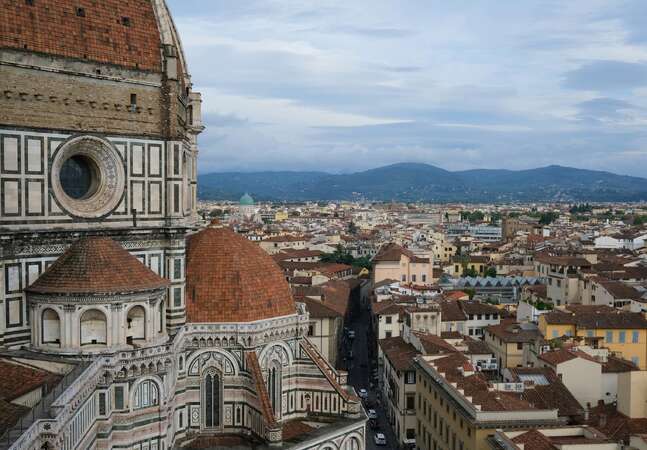
Florence, Italy got its UNESCO listing for the whole historic centre, not just one building, and the city is famous for Renaissance art and architecture despite having begun as a Roman settlement in 59 BCE. Most of it took shape across the 1400s and 1500s.
The Medici family rose to power right around then, and they had more money than sense. Florence's banks were also funding kings and popes all over Europe by that point, and some of that money went straight to artists; Botticelli painted the Birth of Venus for a Medici household, for one.
You can feel how compact that is. The historic center is packed with major landmarks: Brunelleschi's dome at Santa Maria del Fiore sits within the duomo complex, with Giotto's Bell Tower right there in the same cathedral area, and it's a ten-minute walk from the Accademia Gallery, the museum where Michelangelo's David actually stands, and from the Uffizi Gallery, one of Florence's best-known art museums, home to Botticelli's Birth of Venus and masterpieces by Da Vinci. All of it fits into a space you could walk across in under an hour.
Which is sort of the problem if you're only there for a couple of days. Most people try to see the Duomo and the Uffizi in one exhausting afternoon, even though the Duomo is the third-largest cathedral in the world. Major attractions should be reserved in advance, and the Uffizi really needs 2-3 hours if you want to absorb any of it instead of queueing at both and taking in almost none of either.
Staying longer with a Workaway host changes that. If you volunteer in Florence, you're not racing with time, so you can actually sit with one museum instead of rushing five, or wander into a random church that ends up being a highlight of the day, when nobody's queuing for it because they didn't make it onto a list somewhere.
That's the real upside of volunteering in Florence and staying there for a few weeks instead of days. The catch, normally, is cost. Accommodation is what adds up fastest the longer a trip runs, and booking a room for two, three or more weeks in Florence would wreck most solo budgets pretty quickly. That's the bit a Workaway exchange changes, and you can stretch the trip out while keeping the costs quite low.
Best Things to Do in Florence Beyond the Tourist Spots
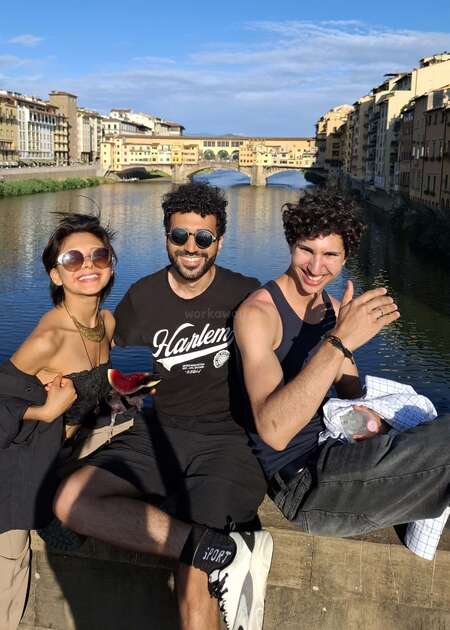
Once you've done the Duomo and the Uffizi, or decided to skip the queues entirely, there are still plenty of Florence hidden gems most three-day visitors never get to.
San Miniato al Monte
San Miniato al Monte, a Romanesque church on the hill above Piazzale Michelangelo, gets a fraction of the crowd even though Piazzale Michelangelo is known for panoramic views of Florence and the Arno River. At the same time, San Miniato is the quieter alternative with equally incredible views. Some evenings the monks who live there sing vespers in Gregorian chant, free to sit in if you time it right.
Giardino Bardini
Down from the viewpoint everyone photographs, Giardino Bardini sits right next to the much more famous Boboli Gardens but somehow stays quiet. Its staircase is lined with wisteria, all hanging purple blooms, especially nice in April before the crowds really pick up. The views are gorgeous, right up there with Piazzale Michelangelo, just without the crowds.
Biblioteca delle Oblate
If you want a free view of the Duomo without climbing anything, Biblioteca delle Oblate is a public library built into a former convent, with a rooftop cafe terrace open to anyone.
The Wine Windows
Keep an eye out for small stone hatches set into palazzo walls around the centre, roughly the size of a book. These are wine windows, cut into the walls of wine-producing families back in the 1500s to sell bottles straight to the street, a small treasure trove of everyday Florence history hidden in plain sight. Most stayed sealed for decades until several reopened during Covid to pass drinks through again, and a handful now serve wine or coffee through the same hole in the wall their family has owned for centuries.
Sant'Ambrogio Market
For food, Sant'Ambrogio Market is one of Florence’s historic markets and among the best places to experience local produce and casual eating in the city, where a lot of Florentines still do their actual weekly shop, smaller and rowdier than Mercato Centrale and a lot less curated for anyone with a camera. On another day, Piazza Santo Spirito also hosts a seasonal market that’s worth checking out. It's a decent spot to put together a picnic instead of paying restaurant prices near the Duomo.
Farmacia di Santa Maria Novella
The Farmacia di Santa Maria Novella is easy to mistake for a museum, with frescoed ceilings and glass cabinets that look older than most churches. Dominican friars started making remedies here in 1221, and it opened to the public as a pharmacy in 1612; it's still selling versions of the same herbal remedies and perfumes today.
Good news if you're counting euros too: most of this costs nothing to get into, which matters if you're after things to do in Florence on a budget rather than another paid queue. Some of what’s worth knowing here only shows up with time: which wine window still has someone behind it, which piazza stays quiet even in the middle of the day, and which evenings the monks at San Miniato actually sing vespers. Those are the things you start to pick up just by being around long enough to notice.
None of this needs a plan either. Half of what makes this city worth slowing down for is turning any afternoon into your own free Florence walking tour, no route, just wherever your feet take you.
Exploring Florence's Neighbourhoods Like a Local
The city center, the Centro Storico, is small enough that most visitors never actually leave it, and it holds most of the main sights, but the best neighbourhoods in Florence just past the obvious bit are where you get a sense of how the city actually runs day to day.
Stay a few weeks with a host, and you start knowing things a short visit never gets you to: when Sant’Ambrogio is actually full of Florentines doing their shopping, how San Frediano’s bars around Piazza Tasso fill up with young locals rather than tourists, and which trattorias behind Mercato Centrale are the family-run ones.
Since most Workaway hosts near Florence are based outside the centre anyway, these are the areas worth knowing before you land, especially because Florence's historic districts are where its tradition of artisanal craftsmanship and everyday local culture come through most clearly in daily life:
| Neighbourhood | What it's actually like | Worth doing | Price point |
| Oltrarno | Across the river from the centre, quieter, still full of small workshops restoring paintings and gilding frames the way they have for generations, and especially known for its artisan shops and stronger local vibe | Wander Via di Santo Spirito, sit in the piazza outside Basilica di Santo Spirito, pop into a workshop with the door open | Budget to mid-range |
| San Niccolò | A narrow strip between the river and the hill up to Piazzale Michelangelo, mostly locals and students | Aperitivo along Via di San Niccolò once the tour groups have headed back down the hill | Budget (market) to mid-range |
| Santa Croce / Sant'Ambrogio | Busy during the day around the market, quieter and more residential once you're past it; Santa Croce can be a good base for longer stays thanks to its more local feel | Sant'Ambrogio Market in the morning, Basilica di Santa Croce if you want the museum route too | Budget (market) to mid-range |
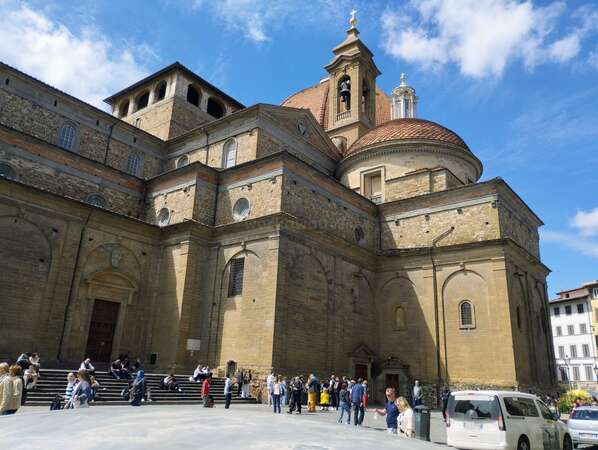
| San Lorenzo | Central and touristy right around Mercato Centrale, but the streets behind it, closer to the Medici Chapels, are still mostly family-run trattorias | Mercato Centrale for food, the Medici Chapels round the corner if you want something quieter than the Duomo queue | Budget to mid-range |
| San Frediano | Western end of Oltrarno, less polished, increasingly popular with young Florentines rather than visitors | Piazza Tasso and the bars around it in the evening, one of the few spots that still feels unbothered by tourism | Mid-range |
| San Marco / Santissima Annunziata | Quieter than the Duomo core but still central, home to the university and a lot of students, plus the San Marco monastery where Fra Angelico's frescoes are still on the monks' old cell walls | The monastery museum, Piazza Santissima Annunziata, if you want something calmer than the Piazza del Duomo complex | Budget-friendly |
They're all walkable from the centre, so a free afternoon is plenty of time to check out whichever one's closest to where you're staying. Spending time in the same neighbourhood over a few weeks gives you the chance to develop your own routines and get to know a side of Florence that’s easy to miss on a short stay.
Florence for Art Lovers, History Fans and Creatives
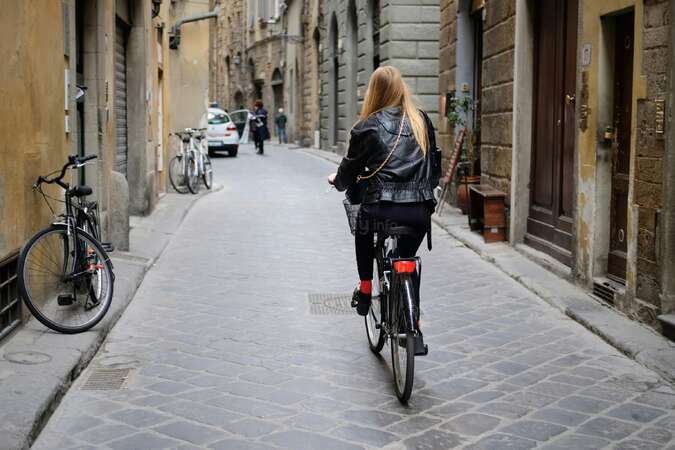
Backpacking Florence for a few days and volunteering there for a few weeks call for pretty different itineraries. If you're volunteering through Workaway, you've got way more time to actually get into things and explore this part of Tuscany. Here are some spots and travel tips depending on whether you're after art, history, or creative culture.
For Art Lovers
If you want more than the Uffizi and the Accademia, these two Florence hidden gems get skipped by people on a tight schedule.
- Cappella Brancacci, frescoes by Masaccio and Masolino from the 1420s, tucked inside Santa Maria del Carmine in Oltrarno, later studied and copied by Michelangelo.
- Bargello Museum, a sculpture museum in a former medieval fortress and prison, home to Donatello's bronze David, usually far quieter than anywhere holding Michelangelo's version.
For History Fans
Florence's history runs deeper than the Renaissance headline acts, and these two spots are some of the more authentic Florence experiences going if history's more your thing.
- Museo Galileo, a few streets from the Uffizi, holds Galileo's actual telescopes and, oddly, the middle finger of his right hand, kept as a relic since 1737.
- Museo dell'Opera del Duomo, home to the original gilded bronze panels from the Baptistry doors and Michelangelo's unfinished Florentine Pietà, both moved indoors to protect them from the weather.
For Creatives
If you want cultural experiences in Florence that are actually happening now, not five hundred years ago.
- Manifattura Tabacchi, a former state tobacco factory turned studios, small galleries, occasional modern art programming and a weekend market, out past the historic centre.
- Le Murate, a former prison converted into a cultural hub with an art residency, cinema and cafe, one of the more unexpected reuses of a building in the city.
How Much It Costs to Travel Florence on a Budget
If you're planning to volunteer in Italy on a budget, staying with a host can make a longer trip much more affordable. A lot of the usual daily costs disappear once you're volunteering in Florence; the bed and sometimes the food are already covered through the exchange. What's left is smaller than most people expect: getting around, coffee, perhaps accommodation for the nights you're not with a host yet, and whatever you decide to pay for on your days off.
None of this needs to add up to much. A bus ticket costs a couple of coins, museum tickets are the only real expense, and a lot of what's worth doing (the wine windows, the free viewpoints, wandering Oltrarno, etc.) doesn't cost anything at all.
| What | Typical cost (for a single traveller) |
| Hostel dorm bed | from around €18 a night |
| Budget private room | from around €40 a night |
| Espresso | around €1 |
| Cappuccino | around €2 |
| Aperitivo, drink and snacks included | €5 to €9 |
| Simple trattoria lunch, budget spot | around €10 |
| Sit-down meal, average restaurant | €20 to €24 |
| Single bus or tram ticket | €2 |
| Uffizi Gallery ticket | €25 full price, €16 after 4pm |
| Accademia Gallery ticket | €16 |
| San Miniato al Monte, Giardino Bardini viewpoint, Biblioteca delle Oblate terrace, wine windows | Free |
A rough day off covering everything yourself works out to one museum ticket, a coffee, a bus ride each way and something simple to eat, which comes to around €30 to €40. Volunteering with a host cuts that number down a lot, since the bed, usually the single biggest expense of any day, is already covered through the exchange.
What Eating In Florence Looks Like
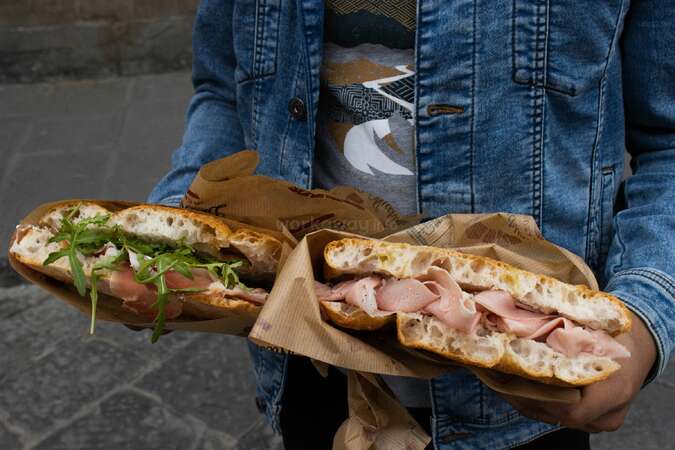
A lot of what ends up on the table often starts at Sant’s Ambrogio, a stall for dried beans and spices, a separate cheese counter, a fish counter, and outside, plenty of fruit, veg, olives and bread. Neighbourhood bakeries matter just as much. S. Forno, the historic bakery in the same district, has been selling bread and schiacciata to locals for over 150 years.
As for the daily meals themselves, they follow their own rhythm, and breakfast is often just a quick coffee and something small standing at a bar counter. Lunch is traditionally the main meal of the day, though a normal trattoria lunch usually means a simple pasta dish or one plate.
Aperitivo comes before dinner, and it includes a drink with snacks or small plates, around 6 or 7 pm, to open up the appetite. Dinner comes later, and tends to be lighter than lunch.
Shared meals can be a much less hurried part of the day, treated as time to spend with people rather than something to get through quickly, which is a part of why they often run longer.
What Volunteering in Florence Actually Looks Like
If you decide to volunteer in Florence, your day-to-day life might look very different from a typical city break, depending on where your host is based. You could be helping out in the morning, shopping locally, taking a bus into Florence for the afternoon, or spending your days off in nearby villages rather than constantly returning to the historic centre. Every Workaway exchange looks a little different depending on the host, but there's a rough shape to how it works near Florence, from first contact through to what's expected once you're there.
Finding and Agreeing a Host
Once you've picked a host, you sort out the details directly through Workaway before you arrive, so there's no surprise on day one: how many hours, what kind of help, whether meals are included, all agreed upfront rather than worked out on the spot. Italy alone also has over 500 hosts, and more than 100 of those are around Florence, so you've got plenty of good options to choose from. If it’s your first exchange, find out how to prepare for your first Workaway experience here. When looking for volunteer work in Italy, it's important to understand what each host expects and what you'll receive in return.
Getting There
Many budget travellers also fly into Pisa; it's the bigger airport for budget airlines, then take the shuttle train to Pisa Centrale and a connecting train on to Florence, about an hour in total. Florence has its own small airport too, Amerigo Vespucci Airport, with a tram straight into the centre in about fifteen minutes.
Florence has an extensive local bus and tram network, with buses operated by Autolinee Toscane and the tram connecting key parts of the city, including the airport. Because the ZTL restricts car access in the historic centre, public transport is usually easier than driving.
Hours and Time Off
Workaway exchanges are generally based around 4–5 hours of help a day, 5 days a week, in return for a place to stay and usually food, but how those hours are arranged varies completely from host to host. One stay might mean helping out in the morning and having the afternoon free, while another might follow a different rhythm depending on the project or family routine. Either way, the idea is that you could spend time with your host, get involved in local life and still have plenty of free time to explore, which is also what makes the cultural side of the exchange real, giving you freedom and space to discover Florence and Italy the way you want.
Requirements for Volunteering in Florence
If you're planning to volunteer in Italy, you'll need to check which entry and activity rules apply to your nationality and the type of exchange you're arranging.
On visas, Italy is part of the Schengen Area, and many visa-exempt non-EU travellers can stay in the Schengen Area for up to 90 days in any 180-day period. Whether that covers a Workaway stay depends on your nationality and how the activity is classified. The rules vary and change, so it's worth checking directly rather than assuming. Longer stays, or other nationalities, mean a different visa route entirely.
It's also important to understand that volunteer work in Italy through Workaway is generally intended as cultural exchange rather than conventional paid employment. Always check the current rules with the Italian embassy or consulate in your country before booking anything.
Lastly, the official language is Italian, so even if some hosts use English, they may still expect you to make a basic effort to speak Italian.
Where to Find Workaway and Volunteer Opportunities Near Florence
Once you know roughly what kind of stay you're after, finding volunteer opportunities in Florence and the surrounding Tuscan countryside is straightforward.
Workaway's own search lets you type in Florence, Italy, set a distance, and filter by host type, cultural exchange, language exchange, sustainable projects, au pair stays, house and pet sitting, among others.
The Workaway Florence listings include different types of cultural and practical exchanges, depending on the host and location.
A lot of listings closer to Florence are:
- Families in the hills and countryside around Florence, in Chianti, Fiesole, or villages like San Casciano in Val di Pesa, looking for help with language exchange or childcare in return for a room and meals. Day to day, that usually means being folded into the family routine, school runs, dinners together, conversations that double as language practice, and evenings that are quieter and slower than anything in the city centre.
- Small organic farms, mostly olive groves, sometimes with vegetables or a vineyard attached, especially through the autumn harvest, and some also need help with animal care. This kind of stay follows the season more than the clock. Mornings might mean picking or tending whatever’s growing and checking on animals.
- House and pet sitting stays. These tend to be quieter and more independent, less about being part of a family and more about having a place and a routine of your own for a while, often with a dog or cat for company.
- Cultural exchange with families living right in the historic centre rather than out in the countryside, which can also suit travellers interested in teaching English-style language exchange if the listing specifically asks for that. The language exchange tends to fold into whatever’s already happening: dinner, errands, helping with homework, or just talking through the day rather than a scheduled lesson.
Whether you want to volunteer in Florence itself or stay in the surrounding countryside, it's worth comparing the type of help requested, accommodation and daily routine before contacting a host. These listings can be a good way to build new skills and find more meaningful volunteer experiences.
Availability changes constantly since hosts post as they actually need help, so it's worth keeping an eye on the Workaway Florence listings, as new ones show up all the time.
Conclusion
This Florence guide covers what that's actually like, where to stay, what things cost, and how an exchange near Florence works.
If you ask me, two or three weeks with a host beats two or three days doing the Uffizi, the Duomo, dinner, and calling that Florence, at least on paper.
If you're ready to volunteer in Italy, browse the Workaway Florence listings, find someone whose place sounds like your kind of thing, message them, and see what they say back.
Who knows, in just a few weeks you might already be there, picking olives in Chianti, and exploring Italian culture with people you’ve got to know along the way.
FAQ
Yes! Workaway can support a slower style of travel, where you stay longer in one place and become more involved with the local community. Some hosts also run environmental, farming or sustainability-focused projects. The overall impact of any trip still depends on things like how you travel, what you consume and the type of exchange you choose. For more on what that looks like in practice, check out these 10 simple tips for sustainable travel.
Start with schiacciata, the olive-oil-rich Tuscan flatbread you’ll find in bakeries all over the city, often filled for a quick lunch. Markets such as Sant’Ambrogio are also a good place to see more of what Florentines actually buy and eat day to day.
You’ll also come across classics such as ribollita, pappa al pomodoro and simple pasta dishes, alongside bistecca alla fiorentina and lampredotto, both firmly meat-based but still an important part of Florence’s food culture. If you’re staying for a few weeks, half the fun is finding the bakery, market stall or neighbourhood trattoria you end up going back to.

Meri is a traveller, writer, and yoga teacher & practitioner, with a passion for slow, sustainable living. She was always drawn to faraway places, different cultures and people, but kept finding reasons to wait.
Studying graphic design in Denmark was her first time living far from home, and she believes it opened something in her. From vanlife adventures in Spain and Portugal, to Workaway volunteering across Costa Rica, Guatemala, Panama, and Sri Lanka, each experience has made her endlessly more curious.
She loves discovering hidden places, eating incredible vegan food, moving her body, and connecting with like-minded souls.
Share the Workaway idea
5 comments
Join the Workaway community today to unlock unique volunteer experiences and free accommodation with over 50,000 opportunities around the globe.
Join Now


