



Profile information
-

Host rating
85 %
-

Last replied
27 Sep 2026
-

Reply rate
100.0 %
Usually responds within 7 days
-

Feedback
-
Total number of feedback received and left
-

ID verified
-

Email verified
Country info

Badges (2)


Join the Workaway community today to unlock unique volunteer experiences and free accommodation with over 50,000 opportunities around the globe.
Join Now

Find your perfect host


Min stay requested: at least a week
Details
-

Description
Important Notice: From 24 December to 3 January, the volunteer program will not host volunteers. Thank you for your understanding.
Hi!
Thanks for your interest in coming. Here’s what we’ll be working on during your stay, and why.
This is a natural reserve. The ecosystem is a tropical rainforest.
Currently, there are four projects under development:
Project 1) Construction of inclusive trails for wheelchair users.
Project 2) Development of tools and training materials for the development and strengthening of the mind.
Project 3) Construction of a multifunctional house. It will be used as a reception area, storage room, and tools workshop.
Project 4) Fundraising organization. Administration of an organization dedicated to raising funds to keep all the other projects economically sustainable.
Where will volunteers work?
Currently, we need the assistance of volunteers with Project 2. For this purpose, volunteers must aquire the BASIC ECO-PSYCHOLOGICAL KNOWLEDGE AND SKILLS.
A prepared volunteer will complete the 3-hour preparation course, “Outdoors Mind Workout,” and will practise what was learned in the course.
If you complete the 3h online theoretical module of the course, and then "successfully" finish the 40 hours of practical eco-psychological help, you are eligible to request a certificare of completion or a reference letter.
Some volunteers that finished the full course, have used to strengthen their CV and apply for university scholarships or jobs.
The model uses planned activities in nature to practise skills for mental well-being.
During the volunteer’s visit, we’ll test an updated journal that also includes elements intended to nurture culture and traditions: giving a practice meaning, recording what we learn, repeating it, sharing it, and improving it through feedback.
This is an initial testing round. We want to understand whether the journal is clear and useful, whether it helps meaningful practices develop and continue, and how people experience those practices in relation to their well-being.
Your honest feedback matters—including what is confusing, unhelpful, or difficult. These observations will help improve future versions.
INFORMATION ABOUT THE STAY
This is a rainforest. Therefore, please think of the stay as if you were on a camping excursion in the middle of nature, with no civilization nearby.
One of objectives is to care for and preserve the forest and all the flora and fauna within it, even the tiniest species.
Therefore, any action that threatens the daily life or peace of the species is forbidden.
For example:
- creating a fire risk by smoking;
- polluting the forest by littering;
- interrupting bird communication by playing audio or loud music;
- scaring sloths for the sake of taking a good photo;
- running on the trails and frightening snakes or insects that may be sunbathing or going down to the river to drink water.
- no drinking alcohol, and respect everybody sleep at night, by avoiding loud noises.
Remember: humans are visitors, staying in a home shared by hundreds of animals and plants.
Threatening the peace or integrity of the forest will result in immediate expulsion from the reserve. The forest only welcomes people who practise respect and show a willingness to coexist with nature.
Do we have tents?
We can lend you a tent, mattress, blanket, cooker, gas, kitchenware, and other essential camping equipment.
What should volunteers bring?
- A book or two to read
- The will to disconnect for two weeks
- Head torch
- Fully charged power bank
- Fully charged phone
- Pen and notebook to record ideas
- Mosquito repellent
- Eco-friendly toothpaste, soap, and shampoo
Where can I charge my phone?
There are solar panels available to charge your power banks and phones. Please make sure you have a standard USB cable. -

Types of help and learning opportunities
 Art Projects
 Help with Eco Projects
 Teaching
 Light gardening
 Farmstay help
 Light maintenance
-

Interests
 Fitness
 Drawing & painting
 Carpentry
 Languages
 Technology
 Self development
 Sustainability
 Charity work
 Photography
 Plant care
 Hitchhiking
 Gardening
 Art & design
 Animals
 Outdoor activities
 Nature
 Beach
 Adventure sports
 Camping
-

UN sustainability goals this host is trying to achieve
-

Cultural exchange and learning opportunities
Volunteering here isn’t just about helping the forest—it’s about connecting with people from all over and sharing experiences that stay with you. I’ve seen people from different backgrounds come together here, and it’s always inspiring to see how much we learn from each other.
We welcome travelers, nature lovers, and curious souls. We cook, eat, and share stories together. It feels like a small international family helping toward something meaningful.
Itacaré has a rich, local culture. You might catch a capoeira circle or try some local food like moqueca or acarajé. There’s always something interesting happening around town.
Everyone brings something unique. Sometimes we exchange skills or ideas—maybe a bit of language practice or a tip on living more sustainably. It all flows naturally, just like life in the forest.
We live simply here. It’s a chance to slow down, reflect, and reconnect with what really matters. Cultural exchange here isn’t something we plan—it just happens, day by day, through shared meals, laughs, and time in nature. -

Help
Your two-week programme
The stay normally includes 10 working days and 4 days off, with four hours of volunteer help per day, and two days off after each five-day working block.
To be on the SAME PAGE:
The propose schedule below follows your working days, starting from arrival. 3 days off can be taken at any time, but please leave 1 day off for the last day of stay.
day 1 — Settle in and learn the updates
Explore the forest, river, trails, sleeping area and kitchen. Get familiar with the reserve through walking and basic trail maintenance. I’ll explain the updated OMW journal and how to use it.
days 2–3 — Create and test your exercise
Choose a natural feature and a mental ability you want to practise. Use the journal to develop an exercise, try it, and record your observations.
If the initial exercise does not fit, you can replace it during these first two exercise days. By the end of day 3, choose the core exercise you’ll continue developing.
days 4–8 — Practise, refine and share
Return to that same exercise each working day. Record what you notice, review your previous notes, and make specific improvements while keeping the core exercise.
When appropriate, invite someone willing to try it. Ask what they understood, experienced, or would change, and record how their feedback influences your next session.
The four-hour work period includes planning, practice, observation, notes and feedback.
days 9–10 — Organize and reflect
Transfer your exercise notes to digital format, keeping the original sequence and recording what changed and why. We’ll also have an interview about your experience and suggestions for improving the journal.
That gives you seven working days using the journal with one exercise, followed by two working days for digital records and interviews. -

Languages spoken
English: Fluent
Spanish: Fluent
Portuguese: Intermediate -

Accommodation
We keep things simple, natural, and low-impact. If you're looking to slow down, live close to nature, and help take care of a beautiful piece of rainforest, this place might be exactly what you need.
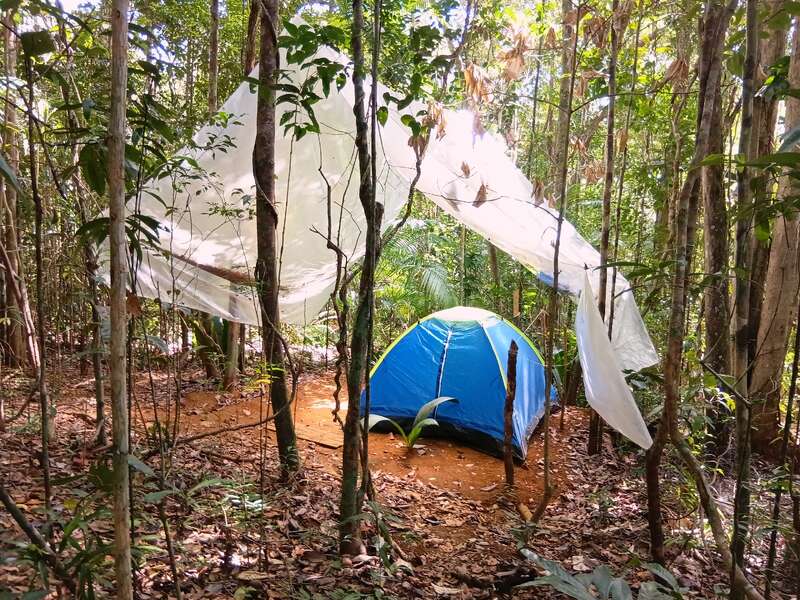
You’ll be staying in a tent, which we provide, along with a camping mattress, pillow, sheets, and a cover. The tents are set up in safe, designated areas within the forest, giving you privacy, fresh air, and the soothing sounds of birds and trees all around. It’s basic, but peaceful—and it grows on you.
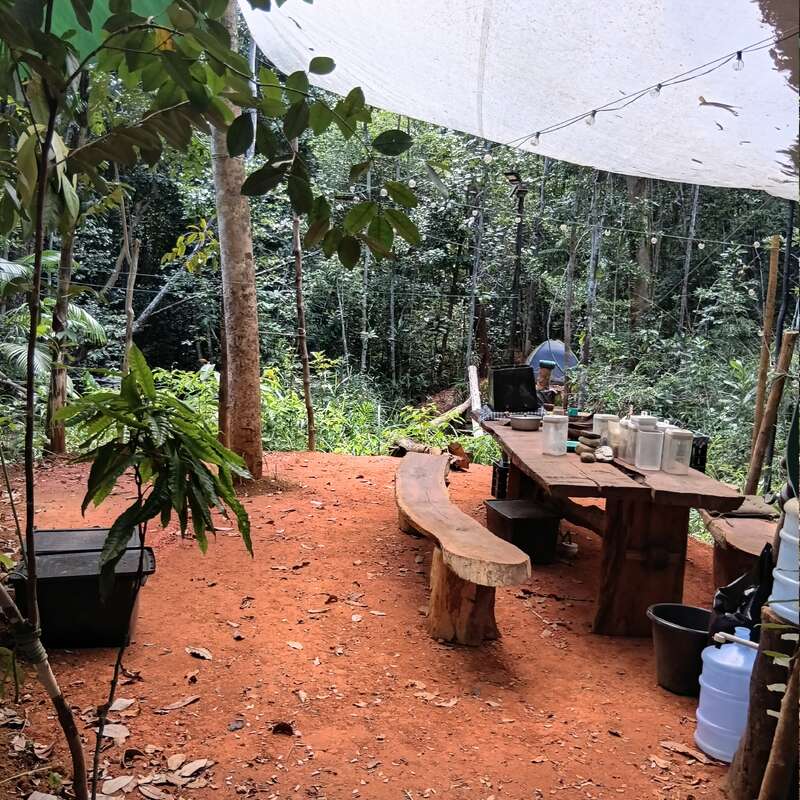
We have a communal kitchen with gas and the essentials you’ll need to cook. Everyone makes their own food, usually with ingredients from local shops or the market. Just keep everything sealed and clean, so we don’t attract curious animals.
Bathrooms are dry composting toilets, and we take hygiene seriously. They’re simple but clean—and part of living sustainably. For bathing, we use natural pools and river water, so we ask everyone to bring eco-friendly soaps and shampoos only.
We collect rainwater for general use, and our drinking water comes from the river. It’s safe when it’s not raining, but you can boil it if you prefer. Laundry is done by hand, using biodegradable soap.
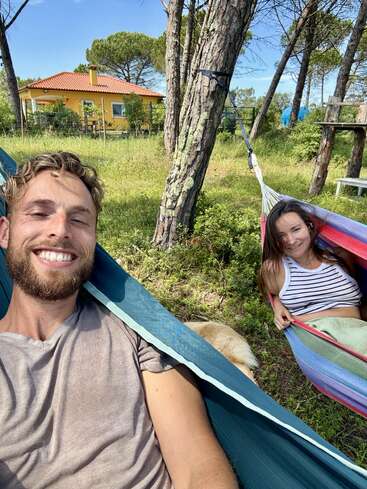
When you're not helping, you can rest in the hammocks, walk the trails, read, journal, or just enjoy the sounds of the forest. It’s a space to disconnect from the noise and reconnect with yourself and the earth.
It’s not luxury—it’s something better: real, raw, and grounding. If that sounds good to you, you’ll feel right at home here. -

What else ...
When volunteers have a day off here, there’s plenty to explore around Itacaré. This little coastal town has a cool mix of nature and culture—perfect for relaxing or getting a bit adventurous. You can spend the day chilling on beaches like Praia da Concha, Praia da Tiririca, or Praia do Resende. Whether you're into surfing, swimming, or just laying in the sun, there's a spot for you. If you're more into hiking, there are waterfalls nearby like Cachoeira do Cleandro or Tijuípe—great places to cool off and enjoy the forest. In town, there’s always something going on. You can check out local markets, grab a snack at one of the cafés, or listen to live music at night. The food is super tasty—try some tropical fruits or traditional Bahian dishes. Getting around is easy. You can hitchhike, take local buses or vans, or hop on a moto-taxi, which is cheap and fast. Walking works too for most places. And if you need help, we’re always happy to give tips or help plan something fun. Your free time here is a chance to enjoy, recharge, and explore at your own pace.
-

A little more information
-

Internet access
-

Limited internet access
-
We have pets
-
We are smokers
-
Can host families
-
-

Can host digital nomads
We usually don't host digital nomads (DN), because we dont have good electricity supply. If you want to come as DN make sure you bring a power bank to charge your devices, and devices fully charged. We have good wifi.
-

How many Workawayers can stay?
More than two