



Profilangaben
-

Host Bewertung
85 %
-

Letzte Antwort
14 Okt. 2026
-

Beantwortungsquote
100.0 %
Antwortet in der Regel innerh. 1 Tag
-

Feedback
2
-

ID verified
-

Verifizierte E-Mail
Country info

Abzeichen (3)




Finde deinen perfekten Gastgeber




Geforderte Mindest-Aufenthaltsdauer: mindestens 2 Wochen
Informationen
-

Beschreibung
URGENT CALL from the wild animals. The drought that has dried all water resources in our forest threatens the survival of the wildlife living inside. We have provided water in our yard--many come drinking it--but it is not enough. We need help provide water in the forest by finding and digging water holes in the valleys. It is tough task but rewarding for your soul.
My wife and I live on Malenge Island, Togean Islands, Sulawesi, Indonesia. Since 2014 we have tried to save endangered species (animal or wildlife) such as primates tarsier and macaque, endemic babirusa (deerpig), and many kinds of Togian and Sulawesi birds. Therefore, volunteers (couple preferable) who love animals, concern about the extinction of wildlife, like to work on conservation, and are keen to help us sincerely are welcome to our home.
The tasks are helping me (Dr. Ating) and my wife Meidy to manage the sanctuary: clearing undergrowth, creating trails in the forest, feeding animals, and finishing the construction of our new house for 4-5 hours in the morning ONLY--no obligation to work in the afternoon as mentioned in the feedback from our last workawayers.
After lunch the volunteers are free to do snorkeling and kayaking in front of our bays. They can also visit Bajo tribe (sea nomad people) village, do trekking in the forest behind our bays. or scuba dive in the clusters of coral-reefs.
Volunteers would stay in a semi-open building next to our house. Its simple bathroom is about 20 meters from the building and the volunteers are expected to fill the big bucket with water from the well or rainwater containers by themselves.
As many little creatures--almost all harmless--moving around on the beach and trees around the sleeping place, we do not accept volunteers who are afraid of these creatures (spider, mosquito, lizard, frog, bat, or rat) or allergic to insect bite.
A comfortable bed with bednet is provided so that volunteers can sleep well with the sound of lapping waves and chirping insects on the trees and lawn and night birds in the air.
Meal is provided in our house, which consists of rice, noodle, egg, bread, and vegetables. Once a week we buy fresh fish, if the volunteers are not vegetarian, from the villages (15-minute boat from our secluded bay).
We don't allow volunteers to smoke and drink alcohol in our place. They can buy and drink beer in our resort neighbors while online there because our place has no phone signal or wifi. If they do it, they have to come back by 10 p.m. because we go to bed early.
Malenge Island is particularly known for its stunning natural beauty and biodiversity. Located in the Togean Islands, the island is home to various endemic endangered species such as Malenge macaques, Togian tarsier (the smallest primate in Asia), Togian babirusa (pigdeer that inspired Alfred R. Wallace to develop theory of evolution), Togian cuscus (marsupial like koala in Australia), Sulawesi hornbill (big bird like toucan).
In addition, Malenge Island offers stunning beaches, tropical forests, and opportunities for snorkeling,
diving, and trekking. A 1-km bridge connects two parts of the island, providing breathtaking views of the surrounding ocean. And the island is inhabited by the Bajo people, known for their nomadic humble living as fishermen and copra farmers.
Overall, Malenge Island is a haven for nature lovers, wildlife enthusiasts, and those seeking a tranquil, off-the-beaten-path destination.
The sanctuary is a bay surrounded by verdant hills on Malenge Island. The land—bought as the only effective way to save Malenge babirusa and macaque from trapping and killing by local farmers and poachers—has diverse ecosystems. It consists of deep sea, coral-reefs, seaweed, and shore of mixed mud, sand, pebble, and rock; the west cliff is lined by mangroves two hundreds meter inland; and these mangroves scatter to the lagoon behind the shore line, the habitat of water birds and brackish water fauna. Coconut trees cover the lower hills and above them is the monsoon forest.
P.S.
Before sending your application, please read the following for your consideration.
1. PERIOD
We only review applications with the period from ONE WEEK to TWO MONTHS before the arrival date of the applicants. For example, if today 4 July, the period should be between 11 July and 4 September.
2. TRAVEL TIME AND COST
To reach our place on Malenge Island, Togean Islands via Jakarta or Denpasar is rather costly and time consuming.
Length: 2 nights in hotels and 14 hours on sea ( ferry ship and speedboat)
Cost: USD 170 (airfare) + 40 (hotel) + 55 (boat) + 35 (airport and harbor taxis) = USD 300 (minimum).
3. TASK CHALLENGES
Weeding farm or clearing forest trail requires volunteers to stoop and squat for four hours under hot and humid weather in the morning. Please consider your endurance for this task. -

Arten von Hilfe und Lernmöglichkeiten
 Hilfe bei Ökoprojekten
 Leichte Gartenarbeit
 Kreative Heimwerkerprojekte
 Betreuung von Tieren
 Mithilfe auf einem Bauernhof
 Hausarbeiten
 Haus- & Haustiersitting
-

Interessengebiete
 Videoaufnahmen
 Haustiere
 Farmarbeit
 Fotografie
 Schreiben
 Tiere
Tiere Yoga / Wellness
 Natur
Natur Wandern
 -

UNO-Ziele für nachhaltige Entwicklung, die dieser Gastgeber verfolgt
-

Kultureller Austausch und Lernmöglichkeiten
The volunteers can learn about the life in remote islands surrounded by wild animals.
-

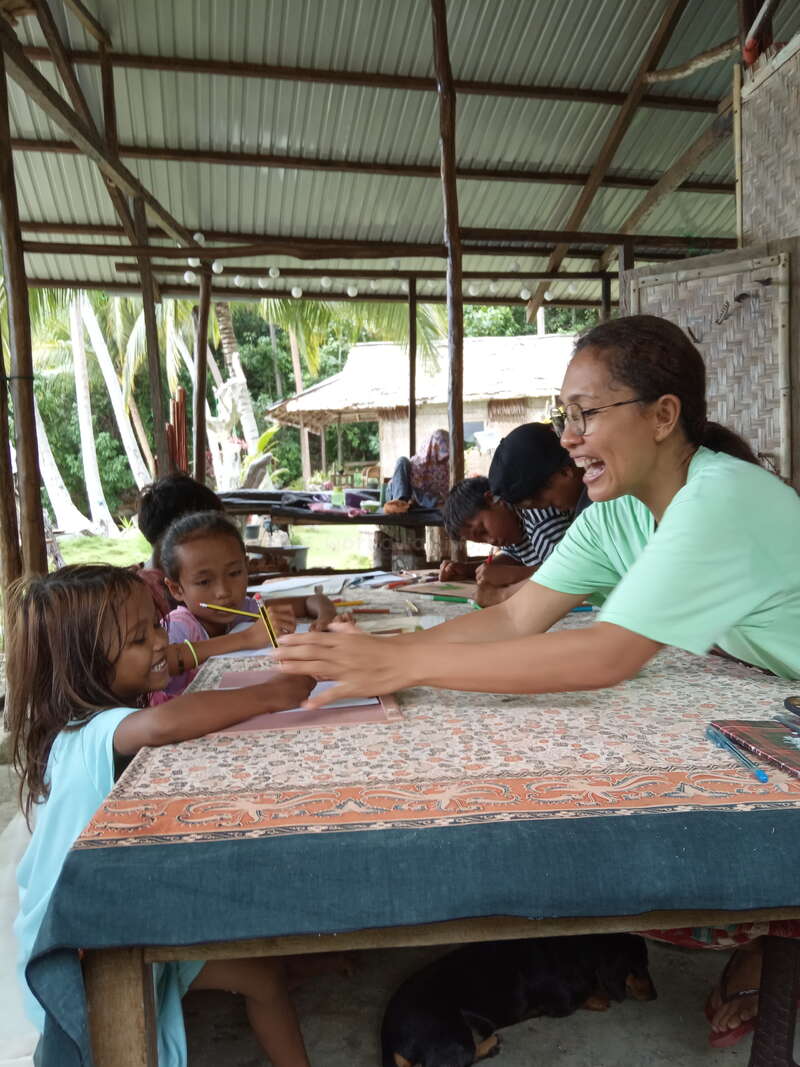
Projekte mit Kindern
Dieses Projekt schließt möglicherweise den Umgang mit Kindern ein. Mehr Informationen findest du in unseren Verhaltensregeln und Tipps hier.
-

Arbeit
Together with us, the volunteers would do the following:
Make new garden or tend the existing ones;
Create new trails or maintain the existing ones; and
Feed the wildlife that comes to our home. -

Gesprochene Sprachen
Englisch: Fließend
-

Unterkunft
A semi-open building next to our house we use as a project center. The simple bathroom is outside.
-

Etwas mehr Information
-

Internet Zugang
-

Eingeschränkter Internet Zugang
-
Wir besitzen Tiere
-
Wir sind Raucher
-
Familien möglich
-
-

Kapazität - wie viele Workawayer maximal
zwei
-

Meine Tiere/Haustiere
Maya












Chatte mit Workawayern, die diesen Gastgeber besucht haben

Feedback (1)
Cutting undergrowth and weed requires people to stoop and squat for optimal result, but Carter and, … read more
Meidy is fabulous- so kind and so fun to be around, and she is a wonderful chef 🧑🍳! She never let us go hungry and always made sure we were comfortable:)
Dr. Ating needs strong people that are willing to work hard. We had to bend our backs for about four … read more
Weitere Bilder

Chatte mit Workawayern, die diesen Gastgeber besucht haben
Feedback
Cutting undergrowth and weed requires people to stoop and squat for optimal result, but Carter and, … read more
Meidy is fabulous- so kind and so fun to be around, and she is a wonderful chef 🧑🍳! She never let us go hungry and always made sure we were comfortable:)
Dr. Ating needs strong people that are willing to work hard. We had to bend our backs for about four … read more